
The Peripheral Nervous System PNS (PNS function): Parasympathetic vs Sympathetic
Discover how the Peripheral Nervous System controls your body’s automatic functions. Learn the crucial differences between parasympathetic and sympathetic systems with expert insights.
What is the Peripheral Nervous System PNS?
The Peripheral Nervous System (PNS) represents all nervous tissue located outside your brain and spinal cord. This remarkable network connects your central nervous system to every part of your body, enabling communication between your brain and organs, muscles, and sensory receptors.
The nervous system includes two main divisions: the central nervous system (CNS) and the peripheral nerves. The CNS, composed of the brain and spinal cord, processes and interprets information, while the peripheral nerves carry signals between the CNS and the rest of the body. Among these, the cranial nerves play a vital role in connecting the brain to sensory organs and muscles. One of the most important is the vagus nerve, which helps regulate heart rate, digestion, and blood flow. The parasympathetic nervous system, a branch of the autonomic system, works with the vagus nerve to promote rest, relaxation, and internal balance.
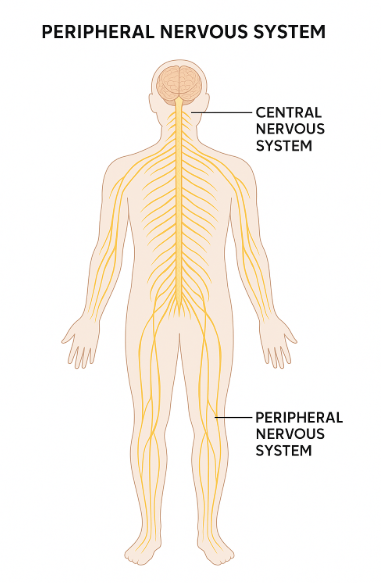
The PNS divides into two main functional categories: the somatic nervous system (controlling voluntary movements) and the autonomic nervous system (managing involuntary functions like heartbeat and digestion).
Peripheral Nervous System PNS: Sympathetic vs Parasympathetic Divisions
Sympathetic System
The sympathetic division activates your body’s “fight-or-flight” response during stressful situations. This system prepares your body for immediate action by increasing energy availability and alertness.
Key Functions:
- • Increases heart rate and blood pressure
- • Dilates pupils for better vision
- • Stimulates glucose release for energy
- • Reduces digestive activity
- • Increases breathing rate
Parasympathetic System
The parasympathetic division promotes your body’s “rest-and-digest” activities during calm periods. This system conserves energy and supports maintenance functions essential for long-term health.
Key Functions:
- • Decreases heart rate and blood pressure
- • Constricts pupils for close vision
- • Stimulates digestive processes
- • Promotes saliva and tear production
- • Supports tissue repair and growth
How to Master Peripheral Nervous System PNS Concepts
Learn Basic PNS Structure
Start by understanding how the Peripheral Nervous System connects your central nervous system to the rest of your body through cranial and spinal nerves.
Study Sympathetic System Functions
Master the fight-or-flight response by learning how sympathetic nerves prepare your body for emergency situations and stress responses.
Explore Parasympathetic Activities
Understand rest-and-digest functions and how parasympathetic nerves maintain homeostasis during peaceful states.
Practice with Real Examples
Apply your knowledge by analyzing everyday situations and identifying which PNS division activates in different scenarios.
Frequently Asked Questions about Peripheral Nervous System PNS
What is the Peripheral Nervous System PNS?
The Peripheral Nervous System (PNS) consists of all nervous tissue outside the brain and spinal cord, including nerves, ganglia, and sensory receptors that connect the central nervous system to the rest of the body.
What’s the difference between parasympathetic and sympathetic systems?
The sympathetic system activates fight-or-flight responses (increased heart rate, dilated pupils), while the parasympathetic system promotes rest-and-digest activities (decreased heart rate, constricted pupils). These systems work together to maintain balance in your body.
How does the PNS affect daily life?
The PNS constantly regulates vital functions like breathing, heart rate, and digestion without conscious effort. It also enables you to respond to environmental changes and maintain homeostasis throughout the day.
Can you control your Peripheral Nervous System?
While most PNS functions operate automatically, you can influence them through techniques like deep breathing, meditation, and relaxation exercises that activate the parasympathetic system and promote calm states.
Essential Peripheral Nervous System PNS Takeaways
PNS connects your brain to every body part
Sympathetic system handles emergencies
Parasympathetic system promotes recovery
Both systems maintain body balance
PNS functions operate automatically
Understanding PNS improves health awareness